GP being a heavy desktop client, NeoXam wanted to migrate it to a web SAAS version. This was an opportunity to audit the existing UX, rethink the interactions by applying web UI patterns, and modernize the product on both UX and UI.
UX Research
The context?
My role?
I conducted user research through exploratory interviews to understand current usage and identify pain points and areas for improvement, working closely with the PM and PO.
Outcome?
Both positive points and areas for improvement emerged. The most significant pain points were:
- Redundant actions throughout the product.
- Inconsistency and lack of guidance, largely due to the software's complexity (familiar to seasoned users, but hard to pick up for new accountants).
- A UI that felt outdated and not fully optimized.
40
One-to-one user interviews conducted
6
Personas identified
9
Cross-persona functional areas identified
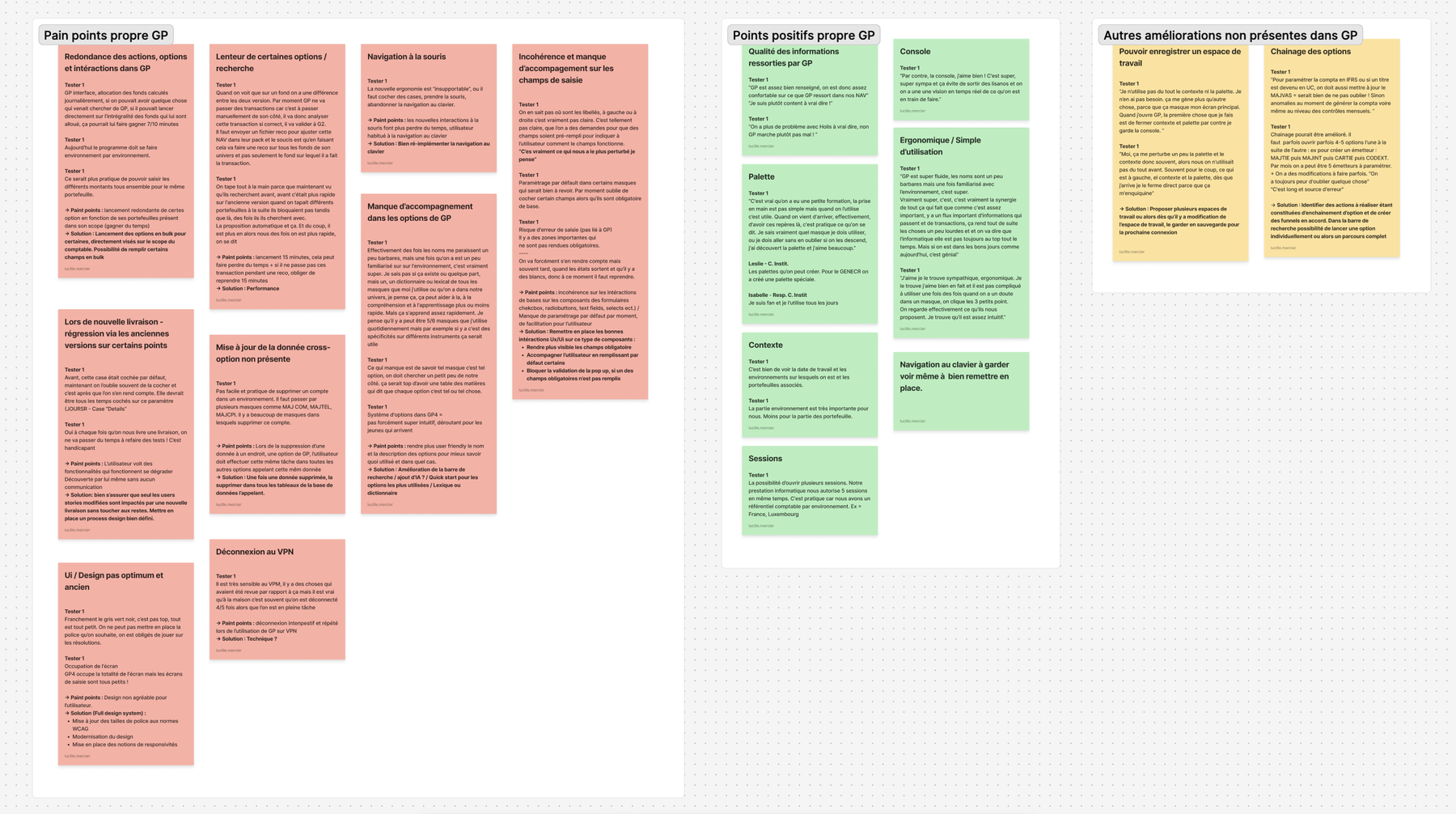
Exploratory interview analysis workshop: Pain points, Positives, and Areas for improvement.
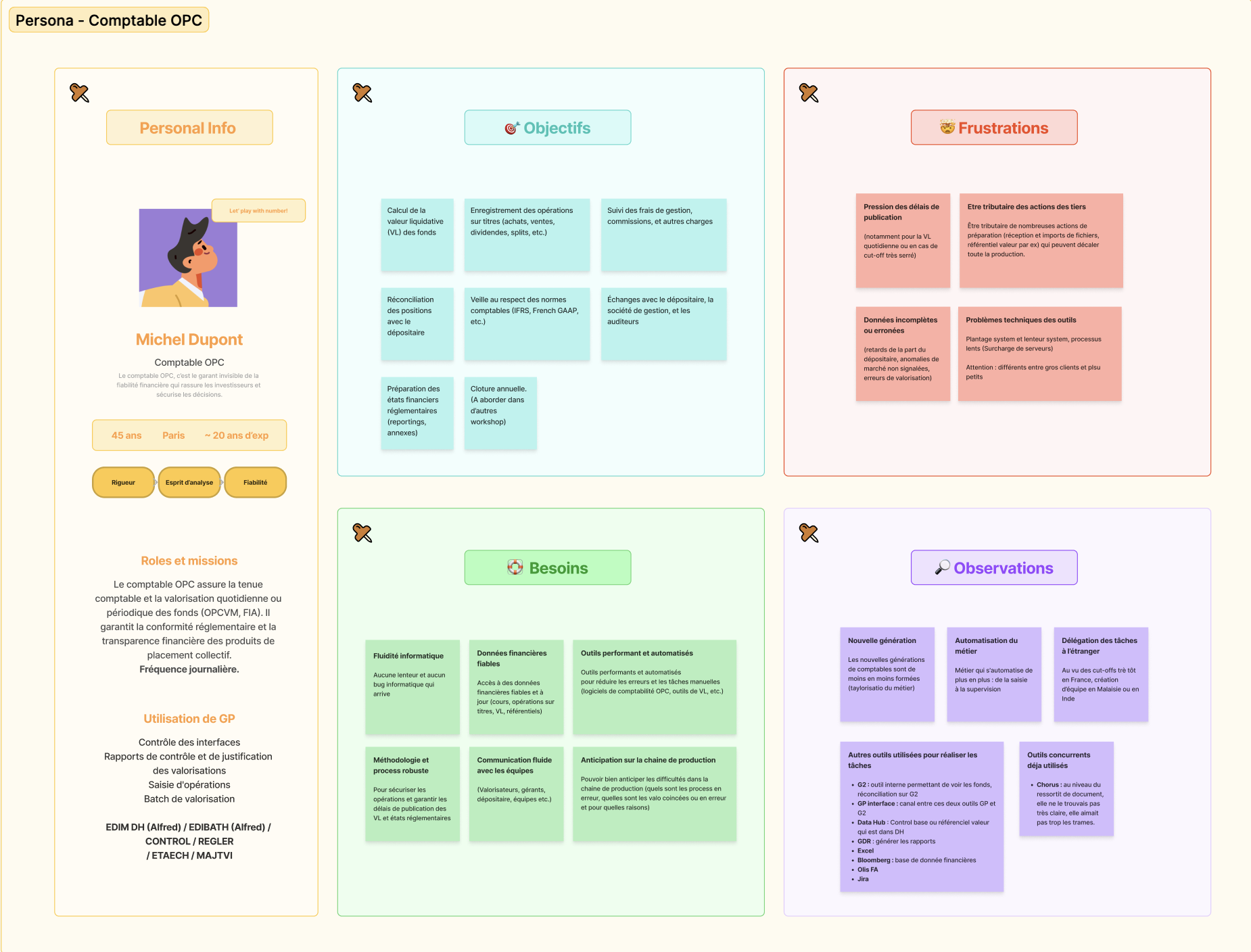
One of the 6 personas identified — OPC Accountant.
UX design & mockups
My role?
I led two workstreams in parallel: migrating existing features to the web without regression, and designing new flows (homepage, module, and AI integration) through user flows and screen mockups. All in close collaboration with developers (back and front), the PM and the PO.
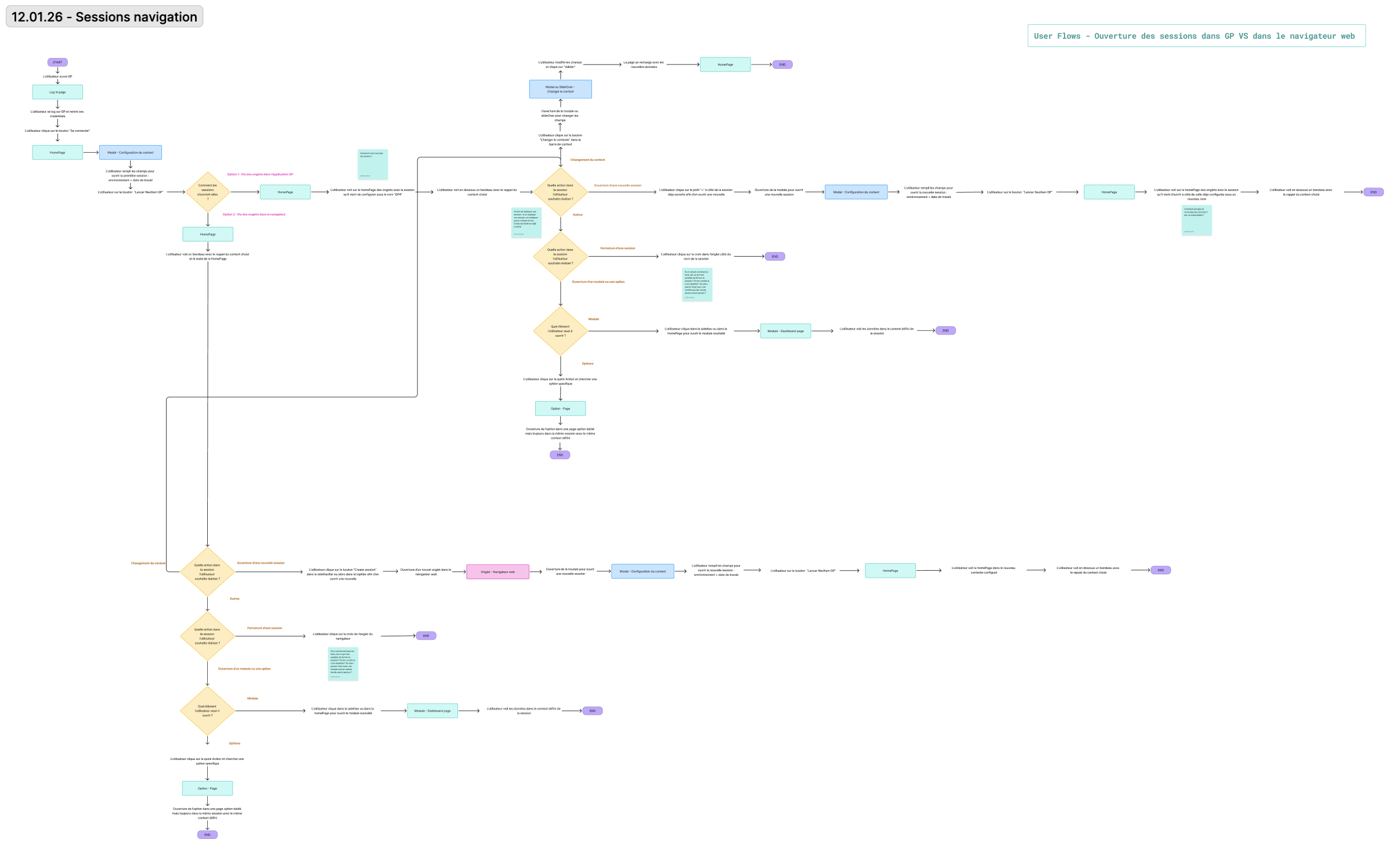
User flow — managing sessions in the browser.
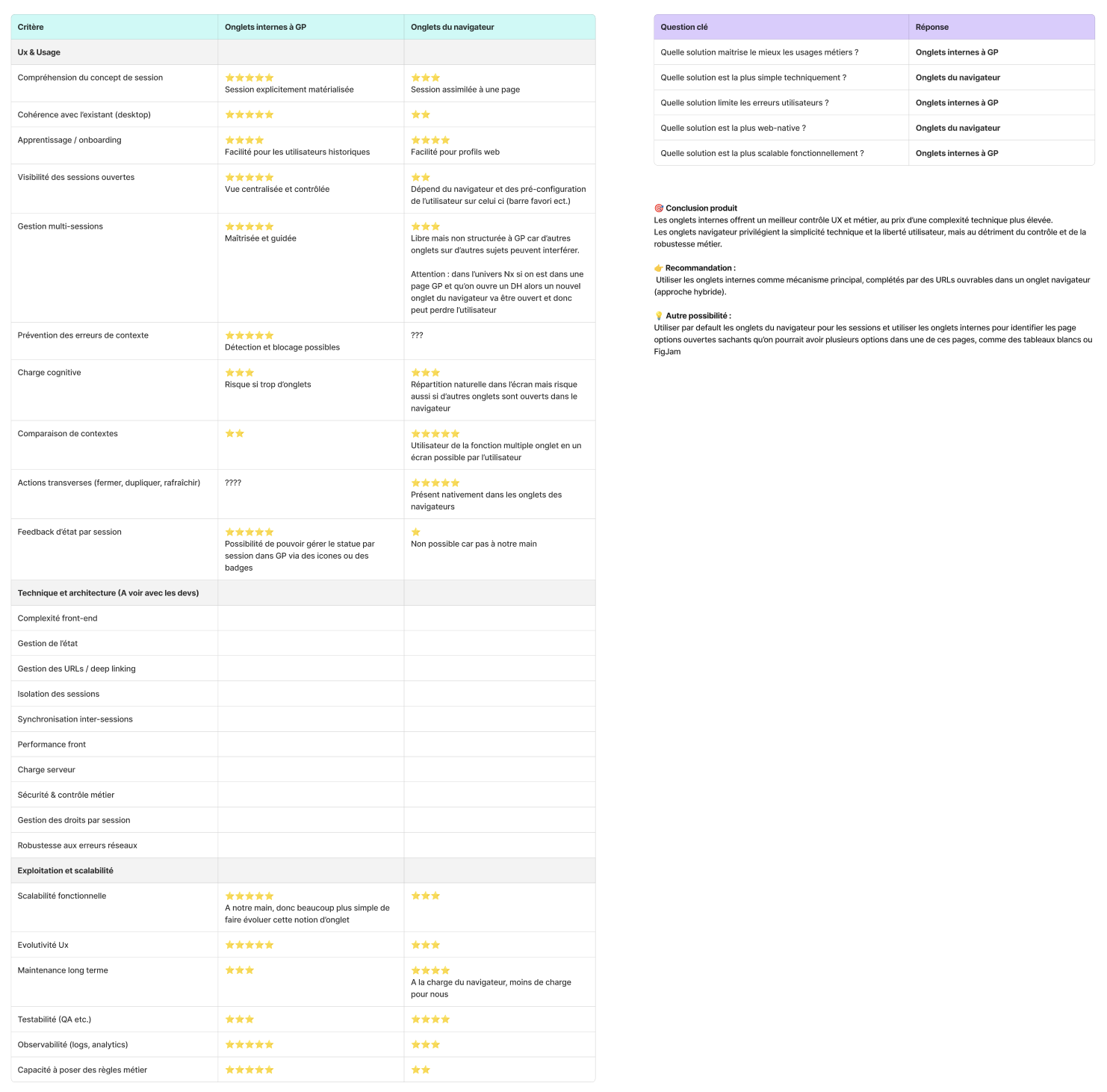
Benchmark of two solutions — UX, operational and technical perspectives.
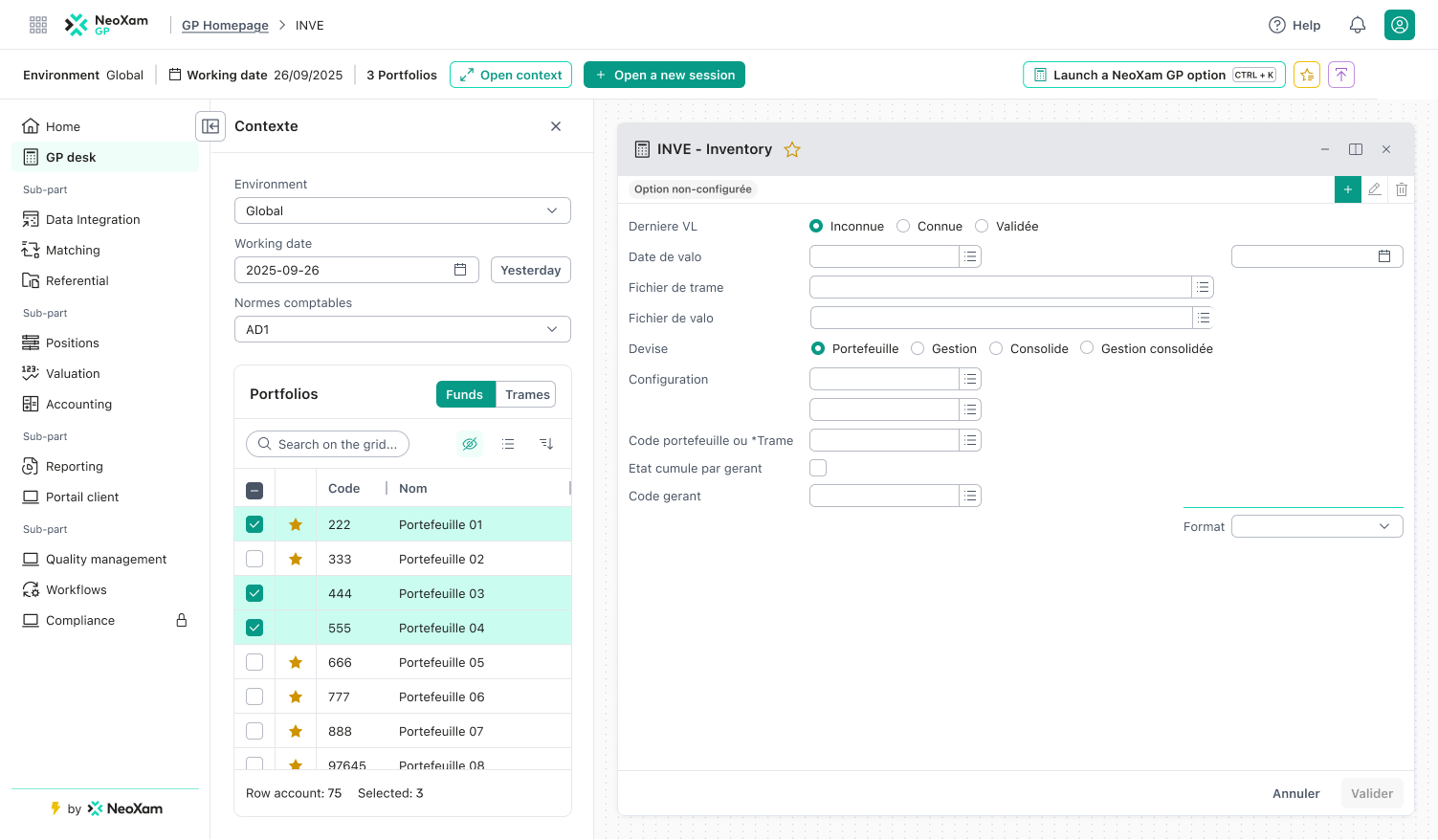
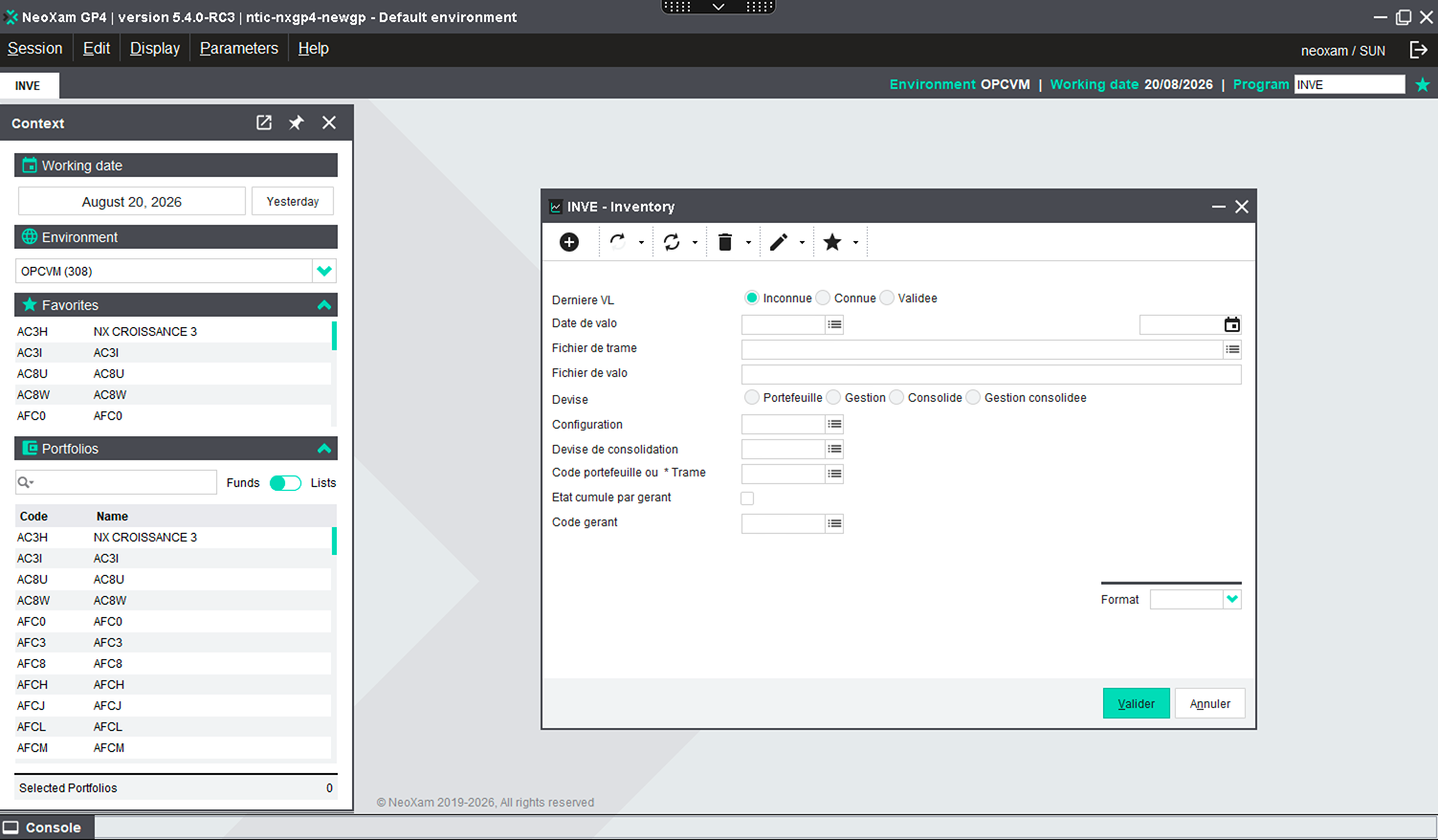
Drag to compare the INVE screen in the old desktop client and on GP4 web.
User testing
My role?
I organized scenario-based one-to-one user tests with usability questionnaires. I run these tests every 3 months on Figma prototypes via Maze (eye-tracking, screen recording). To scale this up, I trained consultants to facilitate this type of workshop and adopt the right posture, beyond just methodology.
Outcome?
- Features approved and adopted by users.
- Tests conducted ahead of development, avoiding endless back-and-forth.
- Ongoing dialogue with our key GP clients, and a sense of ownership from our users in this new product.
5
In-person user tests on key scenarios
1
Test run online (open access + questionnaire)
35
End users took part in these workshops
5
Key features and modules validated, moved into development
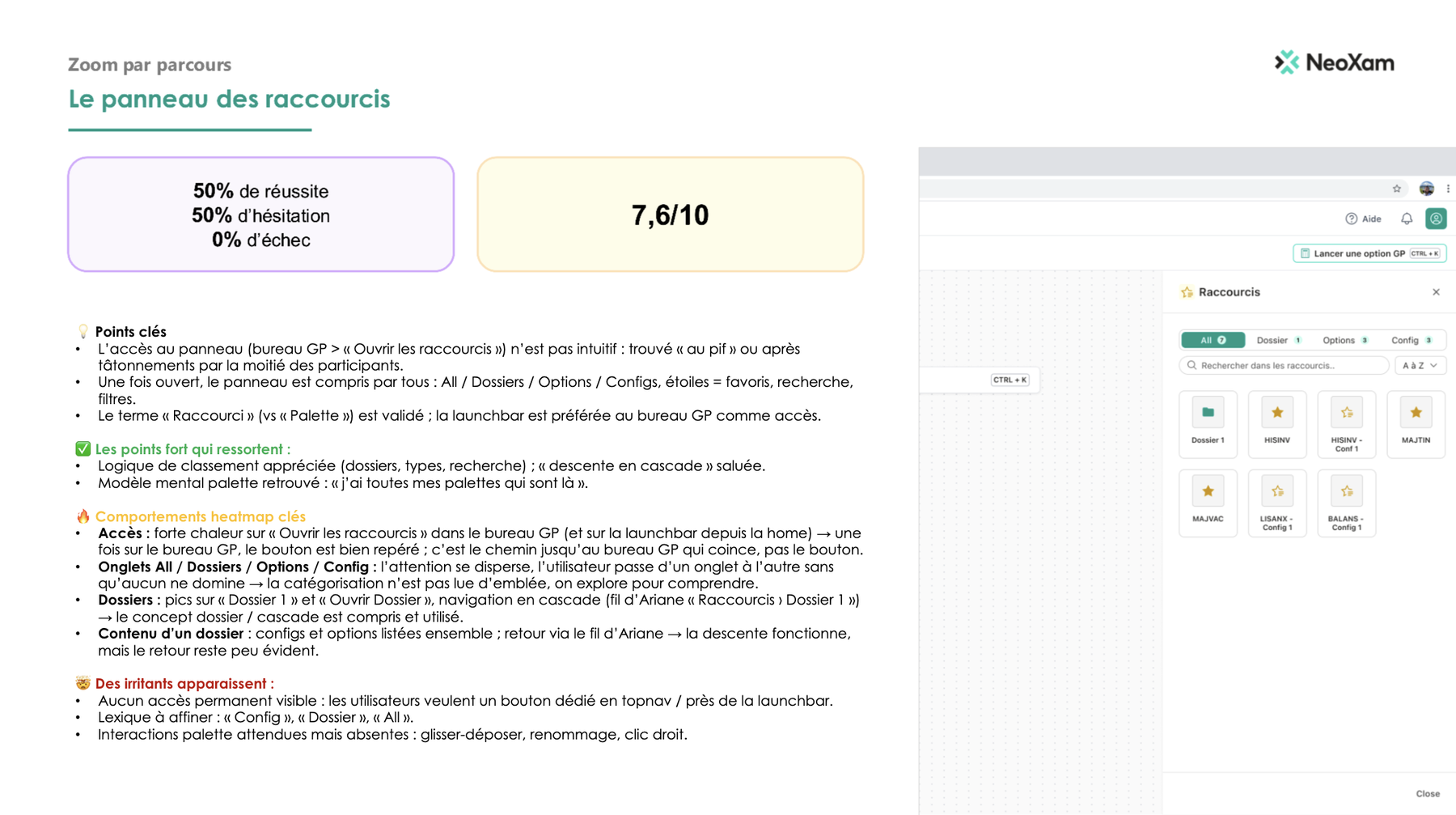
Summary slide analyzing a flow following a user test.
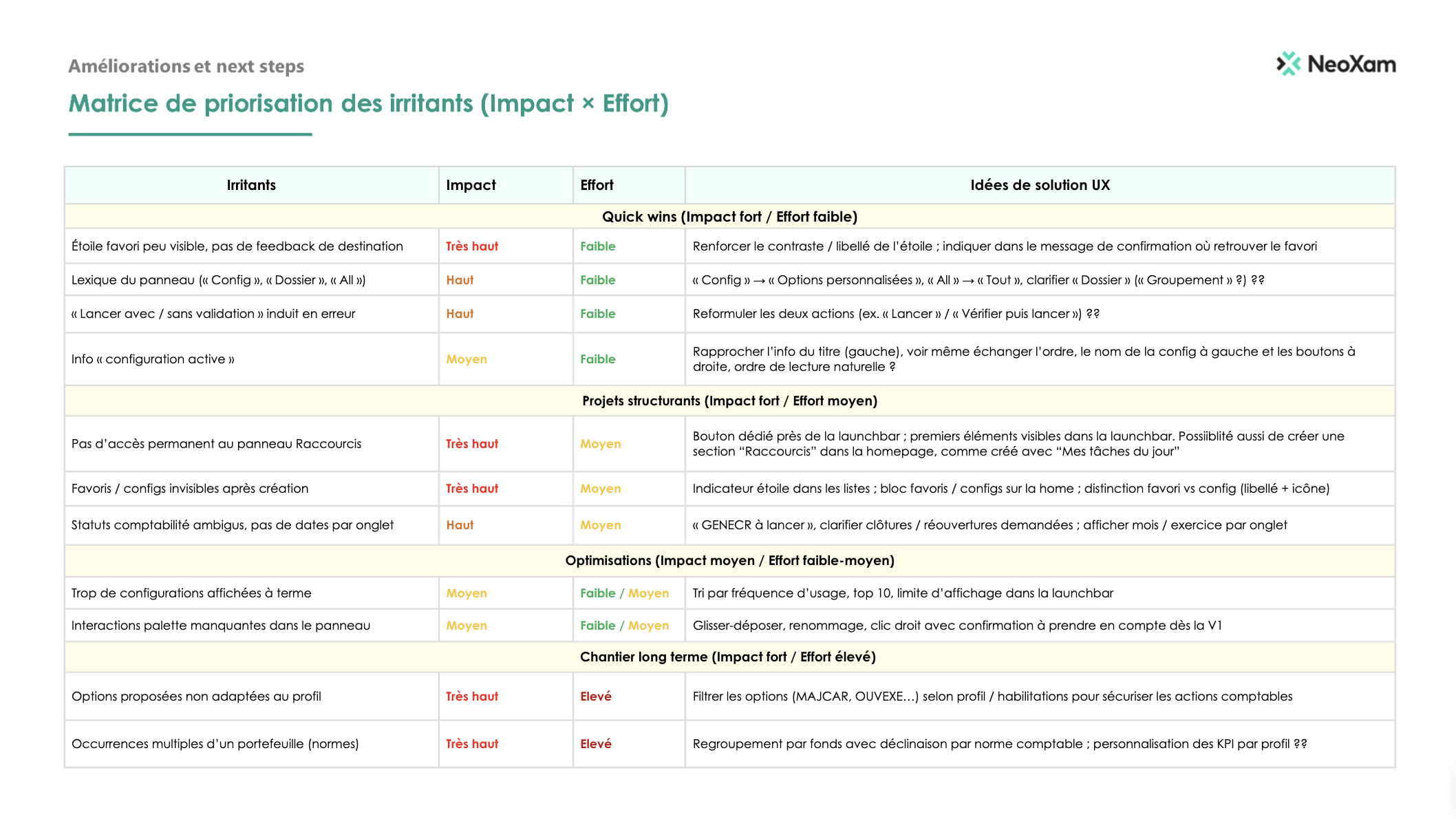
Pain-point prioritization matrix (Impact × Effort) — quick wins, major projects, optimizations, long-term work.
Design governance
My role?
I mapped out the R&D organization of each of the 5 products and proposed 3 standard processes based on need: creating/modifying a feature, updating the Design System, and migrating products' UI to the new design system.
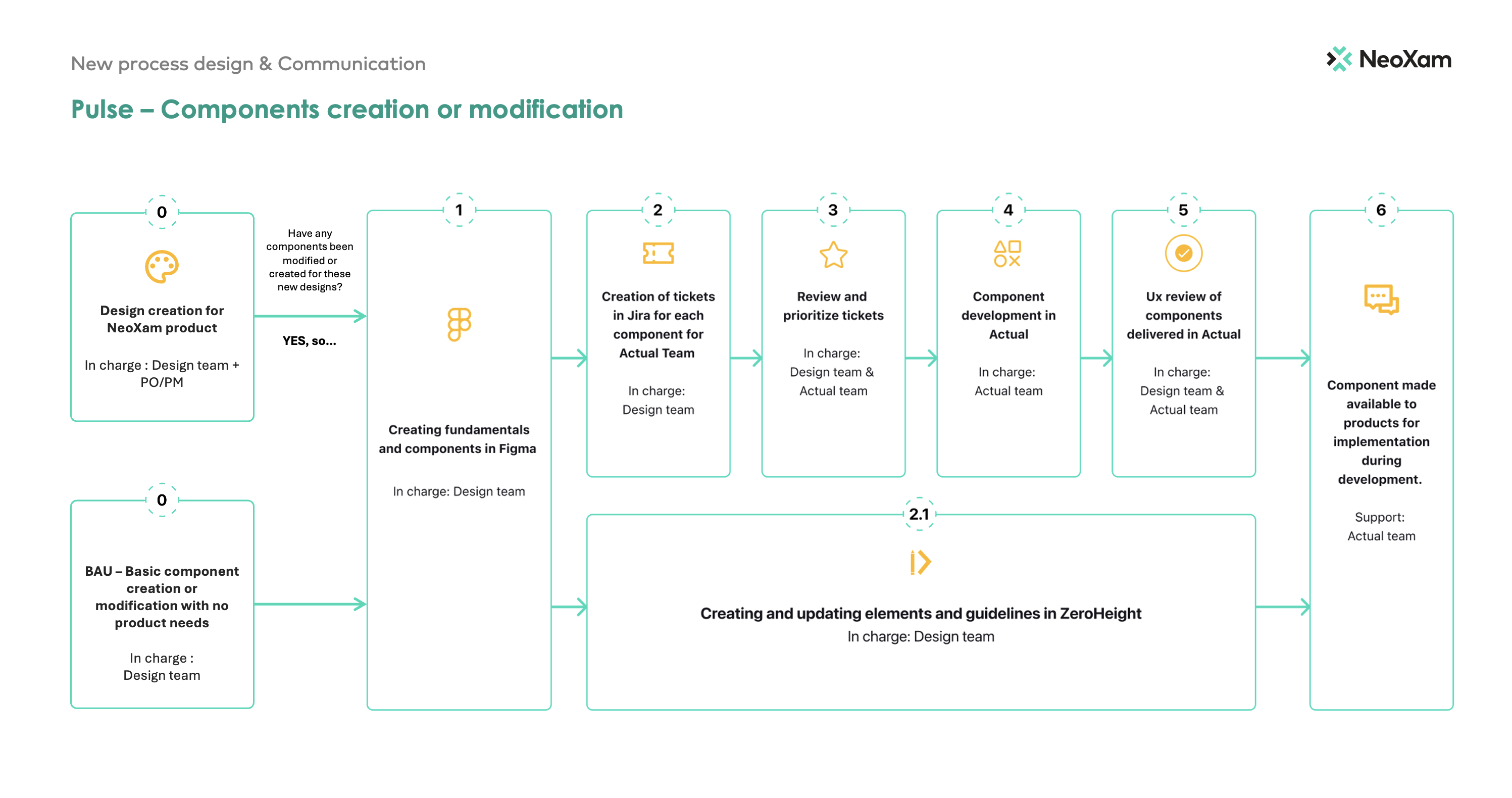
Process for creating/modifying Pulse components.
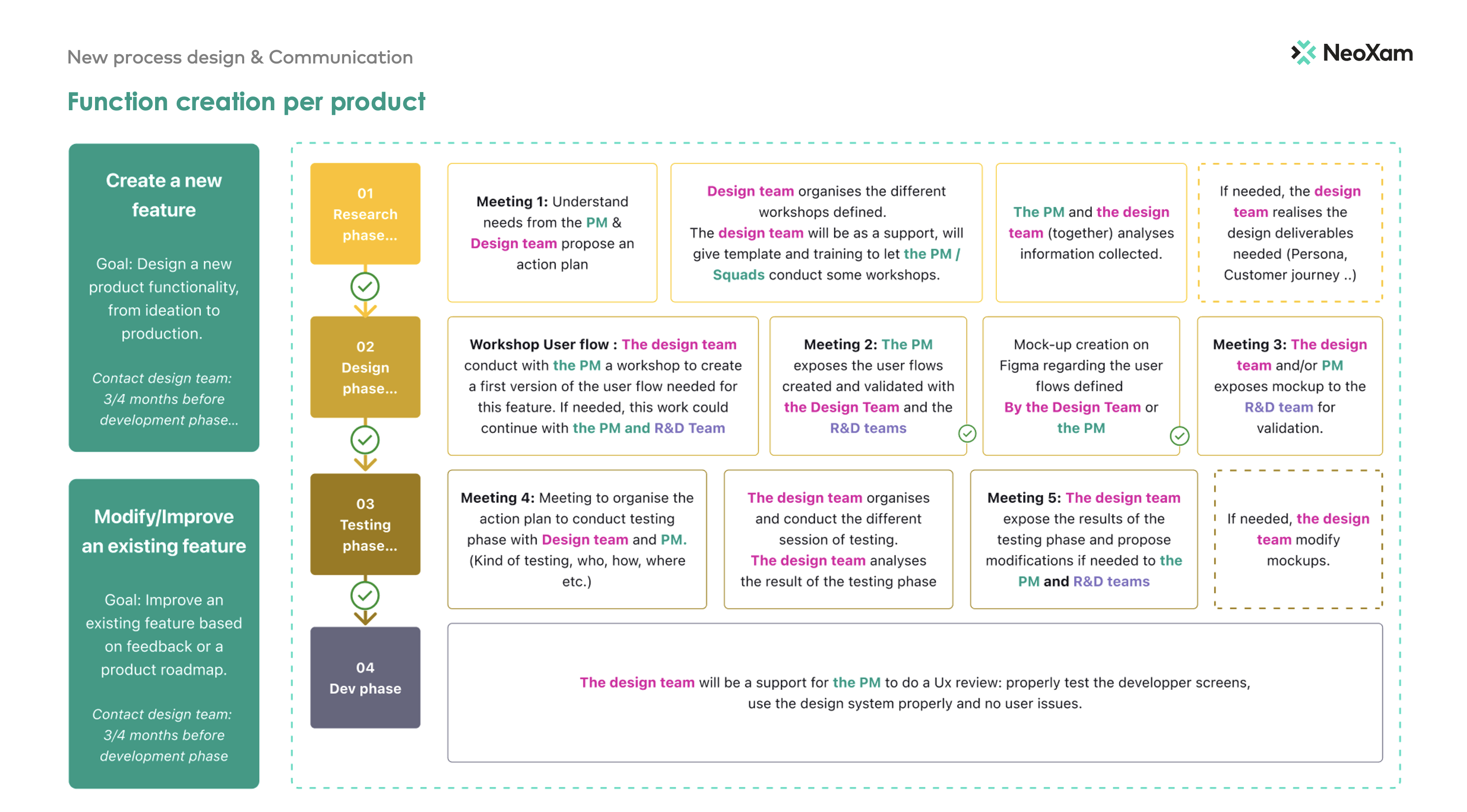
Feature creation process per product.
Pulse design system
My role?
I created and maintain Pulse, the cross-product design system: mapping out human-machine interactions, a component library (data viz and complex components) and tokens in Figma (light, dark and high contrast modes), in collaboration with a dedicated front-end development team. I implemented WCAG 2.1 Level AA standards and documented the design system via ZeroHeight, Storybook, and Claude skills.
1 year
To deliver a first stable version
3/5
Products have adopted the design system
50%
Faster to build pages
70%
Design system adoption rate
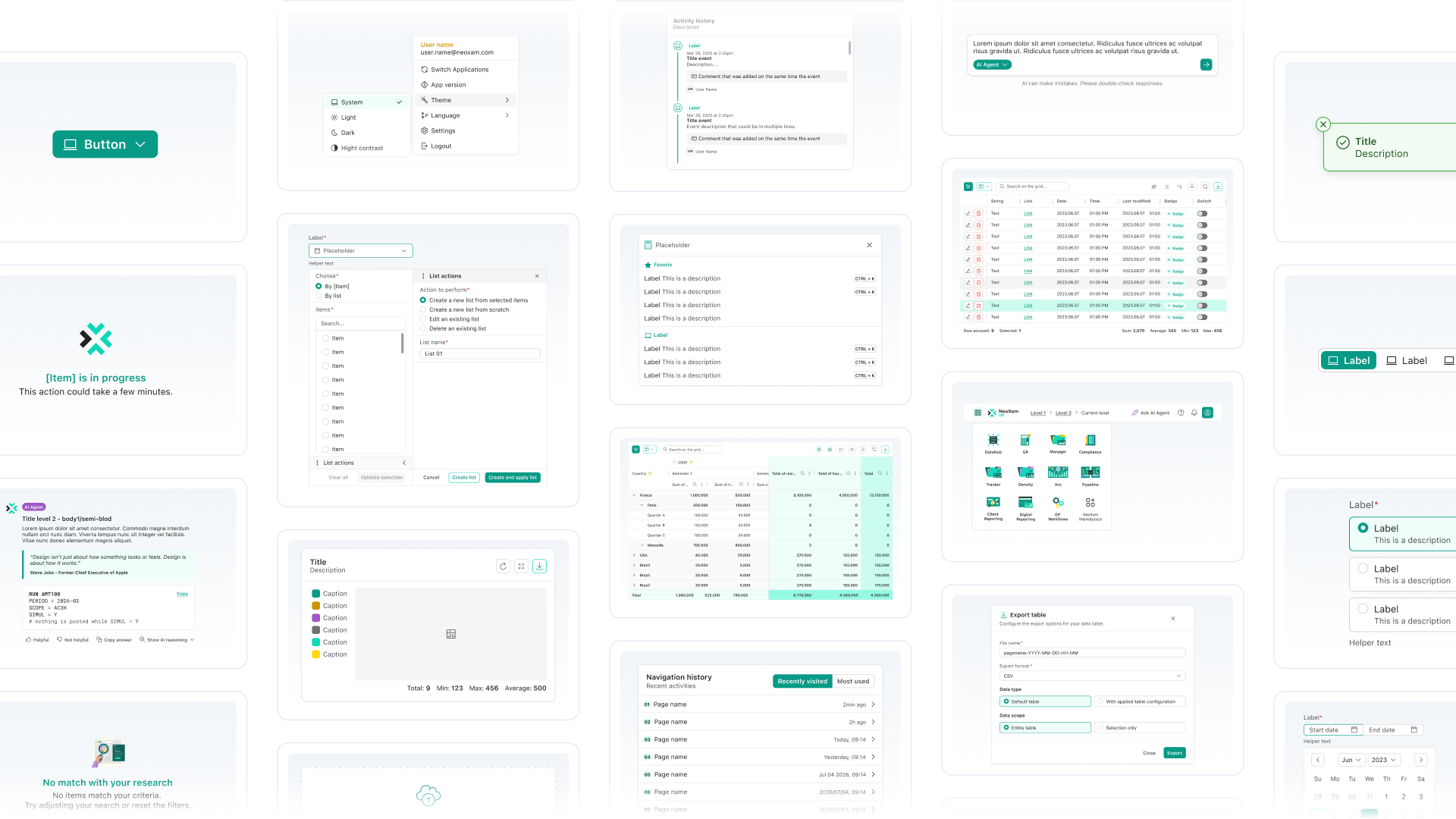
Component library and tokens — Figma, Pulse design system.
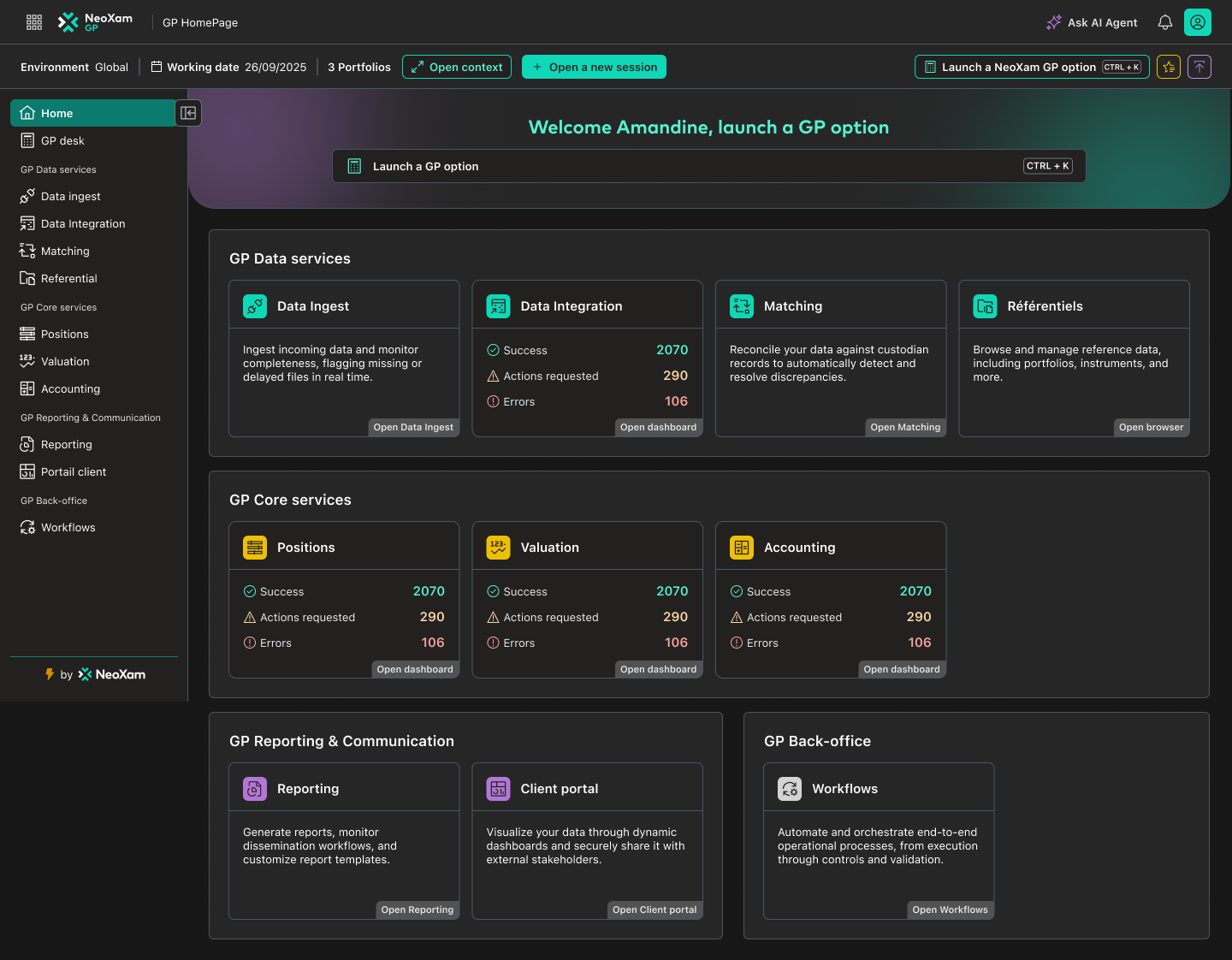
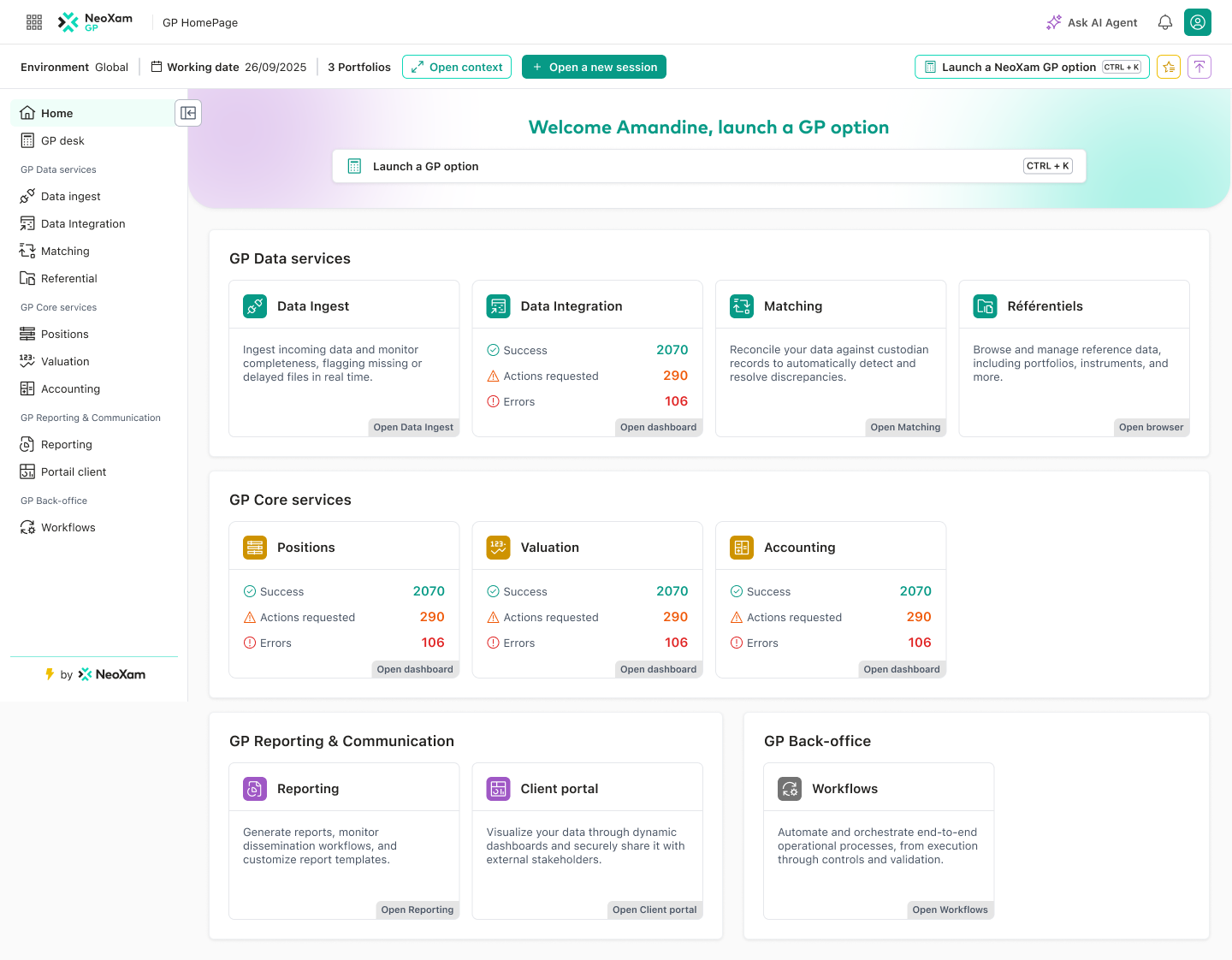
Drag to compare light mode and dark mode on the same screen.
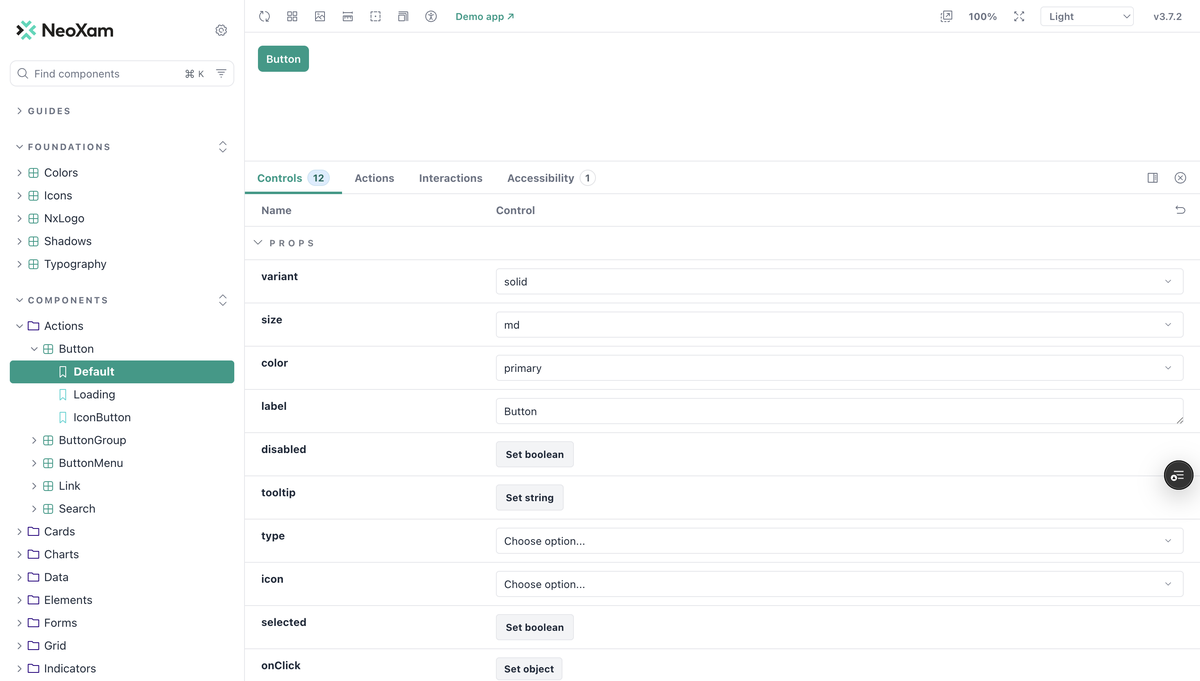
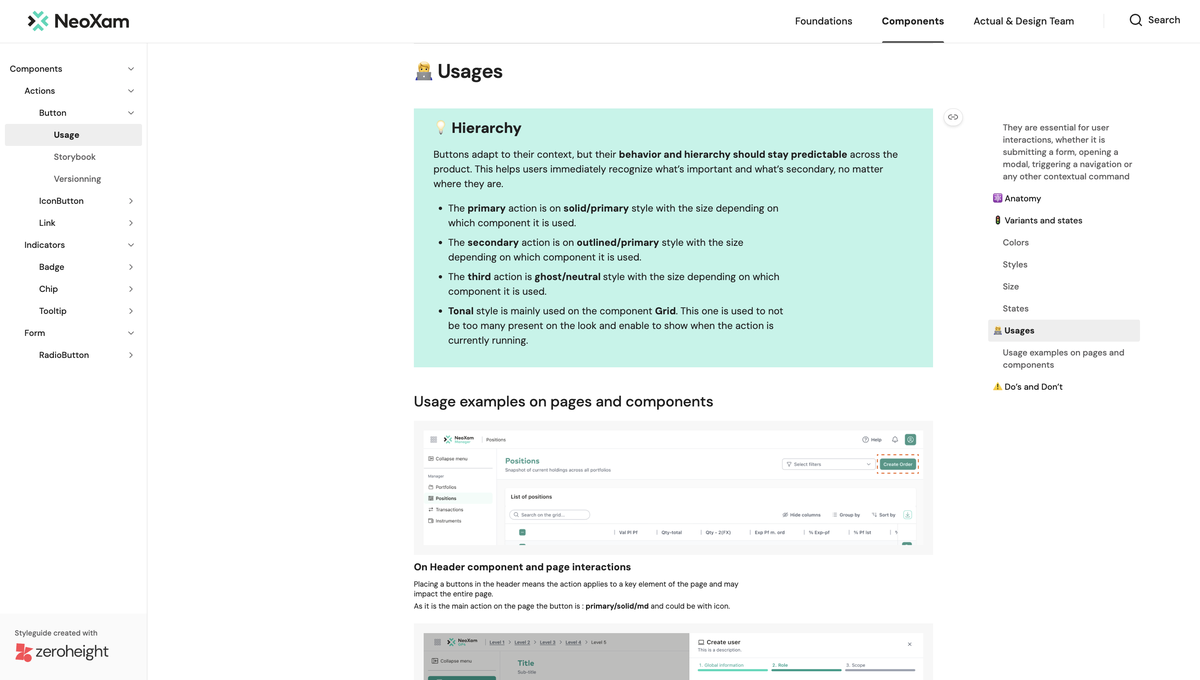
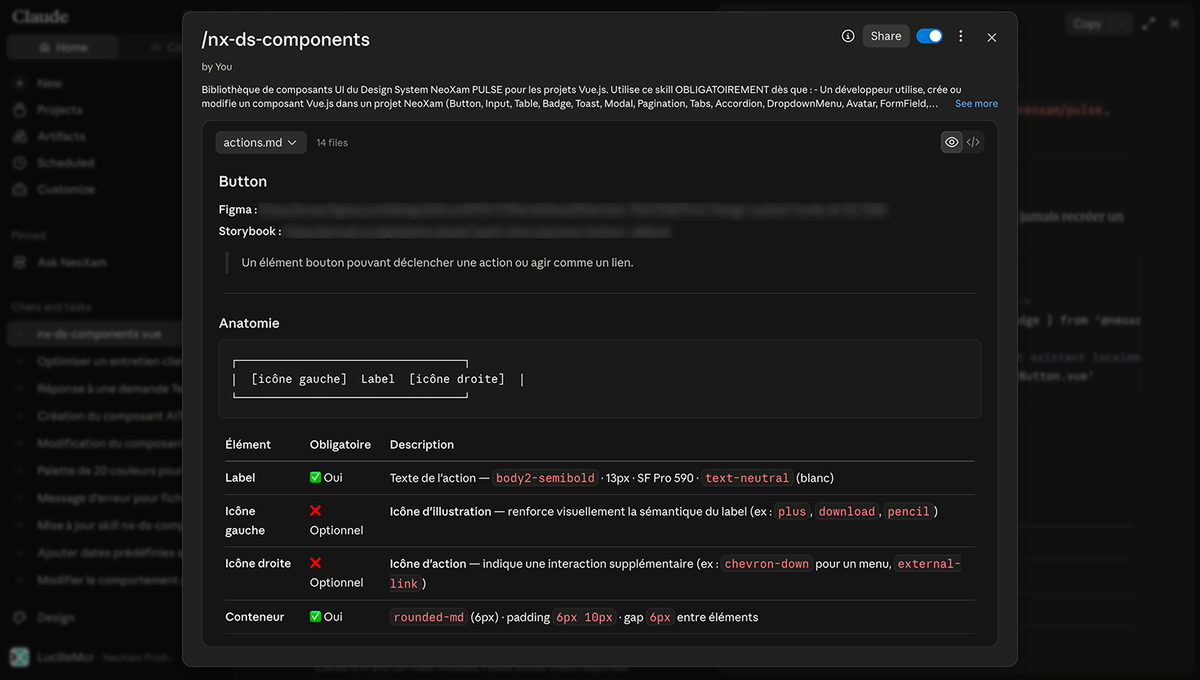
Documentation of a button component in Storybook, ZeroHeight, and a Claude skill.
Cross-product Product Owner
My role?
- I gather cross-product design needs for the annual roadmap and run quarterly check-ins for adjustments
- I lead a monthly meeting with product teams on prioritizing design topics and development work for the design system's dedicated front-end team
- I organize the end-of-month decision meeting with PMs/POs and the CPO
- I drive the monthly design system release with the front-end team
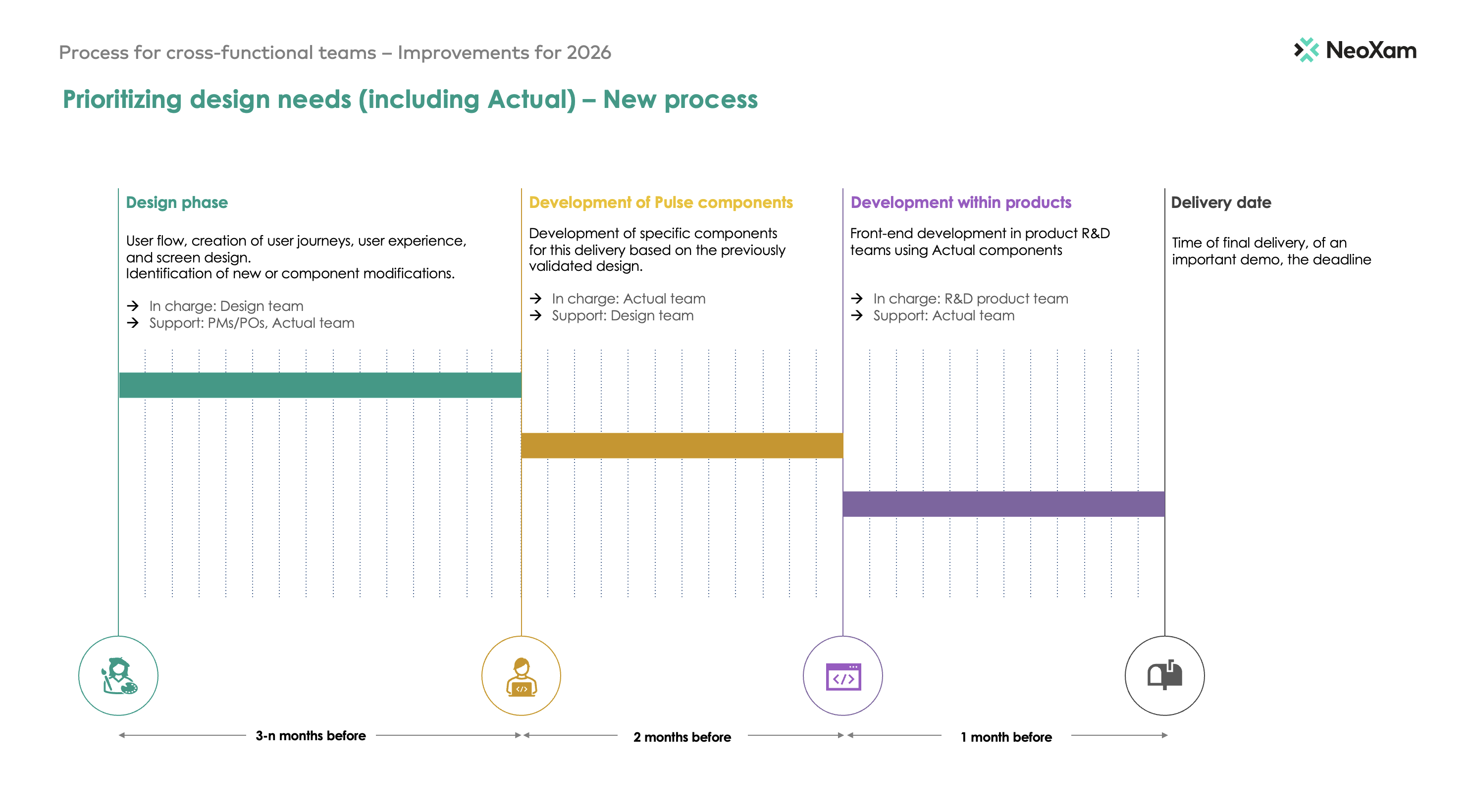
Design needs prioritization — Gantt view.
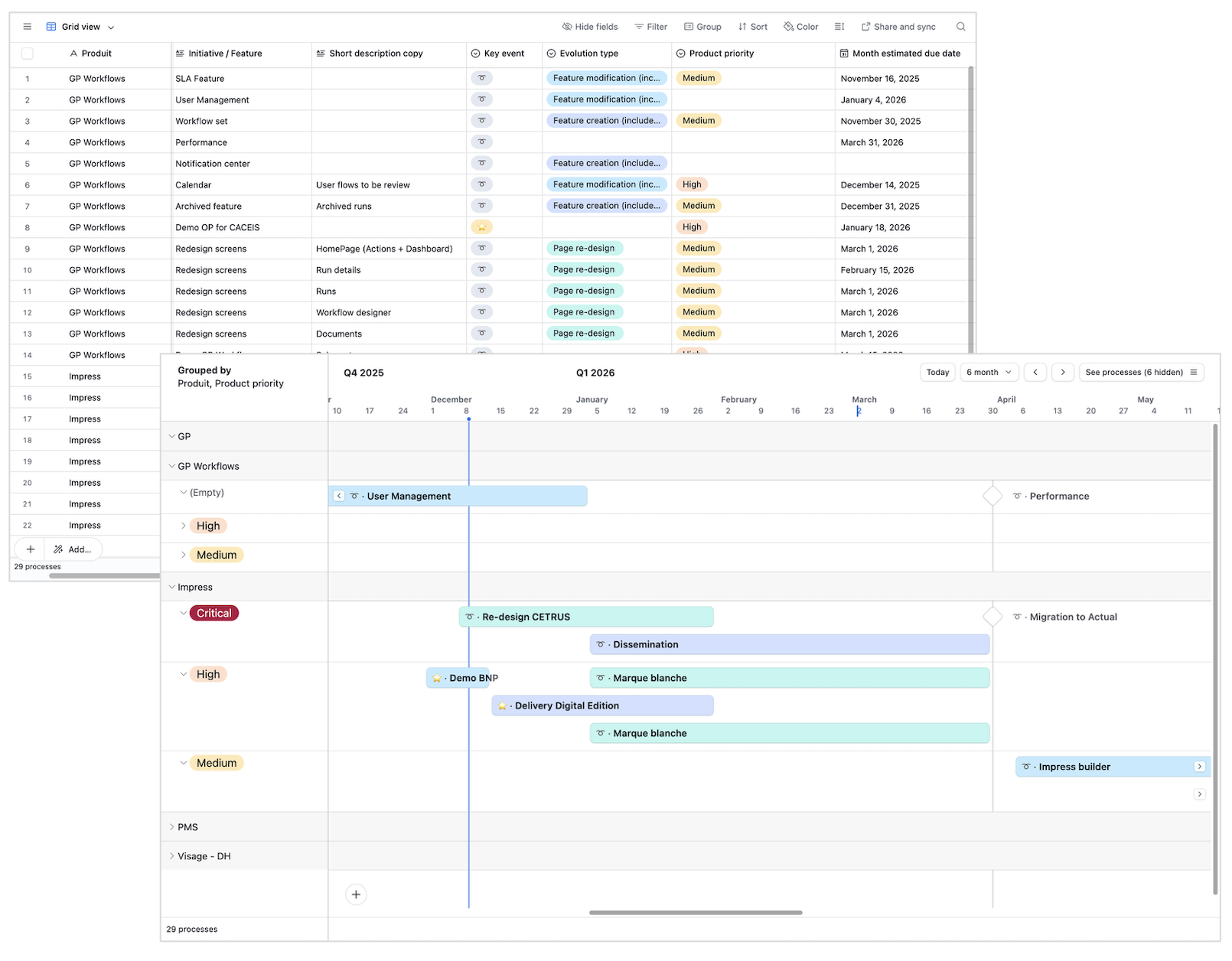
Cross-product roadmap and topic tracking — grid view.