Qabi is a chatbot built in-house, based on a model pre-trained by Personal Finance's data scientists. It was created in 2019. Following Covid, which impacted its launch, a redesign of the old Qabi was kicked off.
Context
The project?
My role?
My UX design skills were put to use to understand the needs of the two teams wanting to use Qabi for this new launch:
- I conducted exploratory interviews to understand needs, pain points, and human-machine interactions when using a chatbot.
- I tested the old Qabi (2019 version) with users.
- I reported back the results and created the personas.
- I drafted the new decision tree, working with the data scientists.
Exploration & research phase
The context?
Qabi is an internal chatbot offered to several teams, meeting several needs. As part of its redesign, one team was selected so I could conduct user research on the old Qabi, and thereby understand their needs and requests around setting up a chatbot within their team.
My role?
During this same exploration phase, I conducted research into human-machine interaction to understand the syntax and communication patterns used with this type of tool.
Outcome?
By the end of this phase, two personas had been created:
- The first matching the profile of someone on the team behind the chatbot.
- The second representing someone using the chatbot to find answers to their questions.
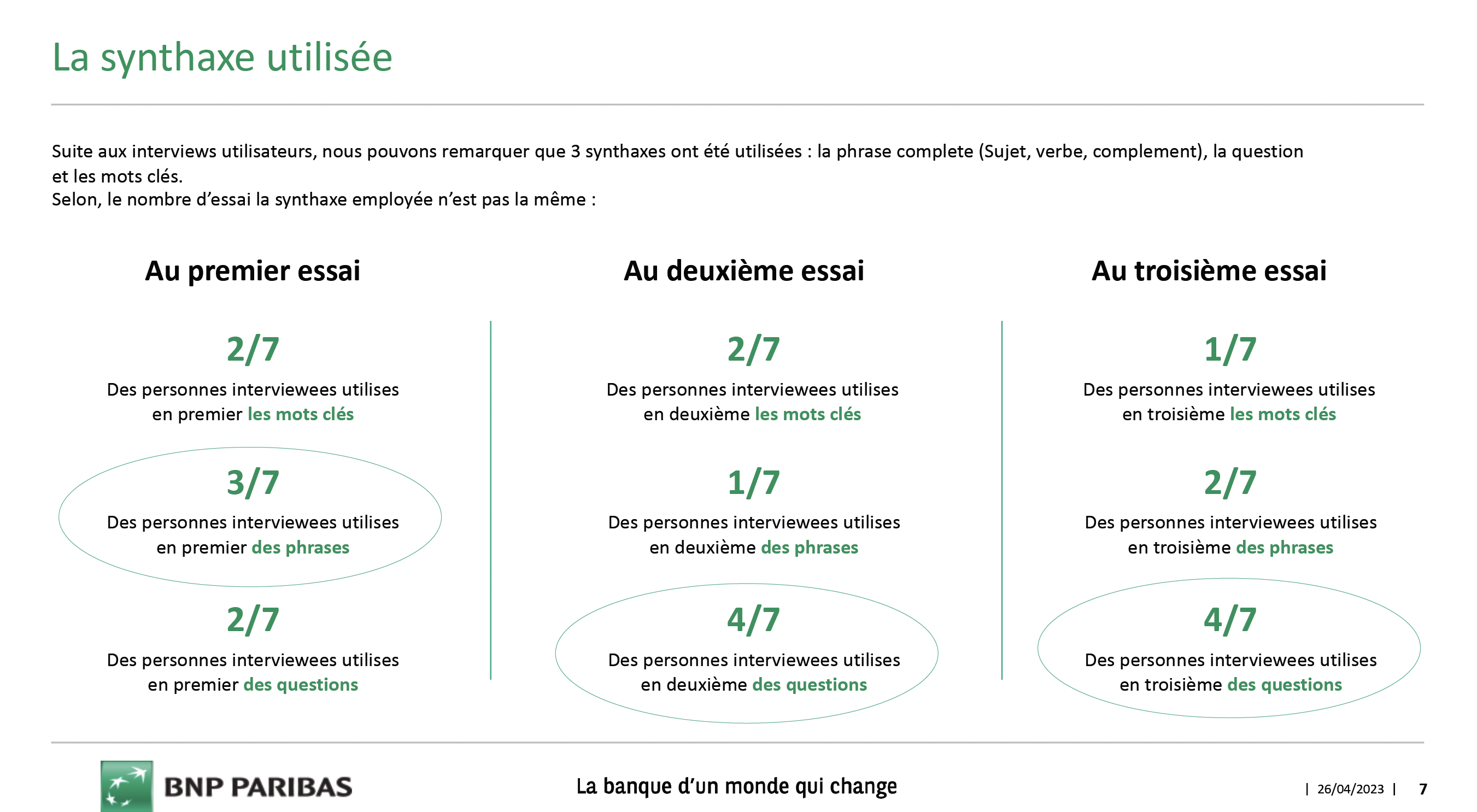
Syntax used by users, by number of attempts.
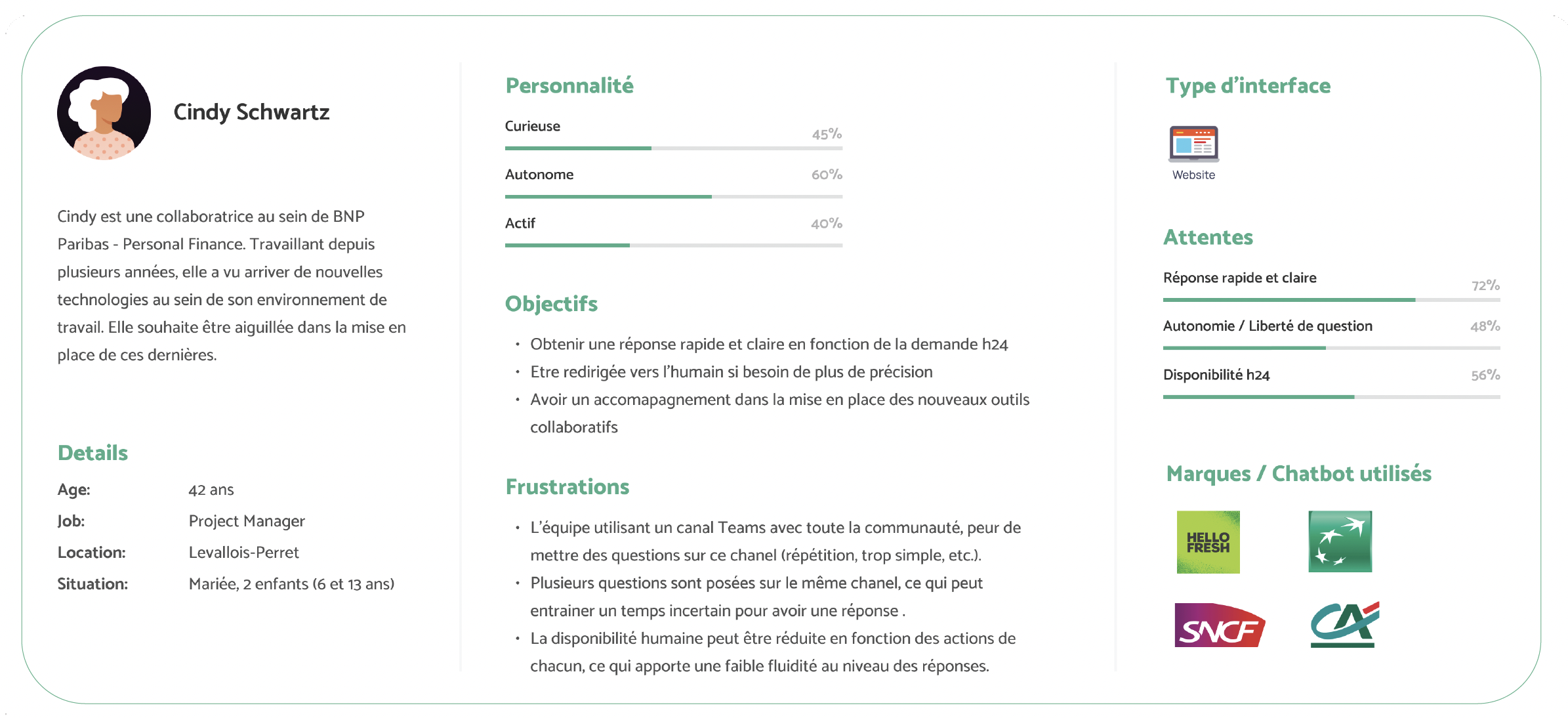
Persona — Cindy Schwartz, an employee using Qabi.
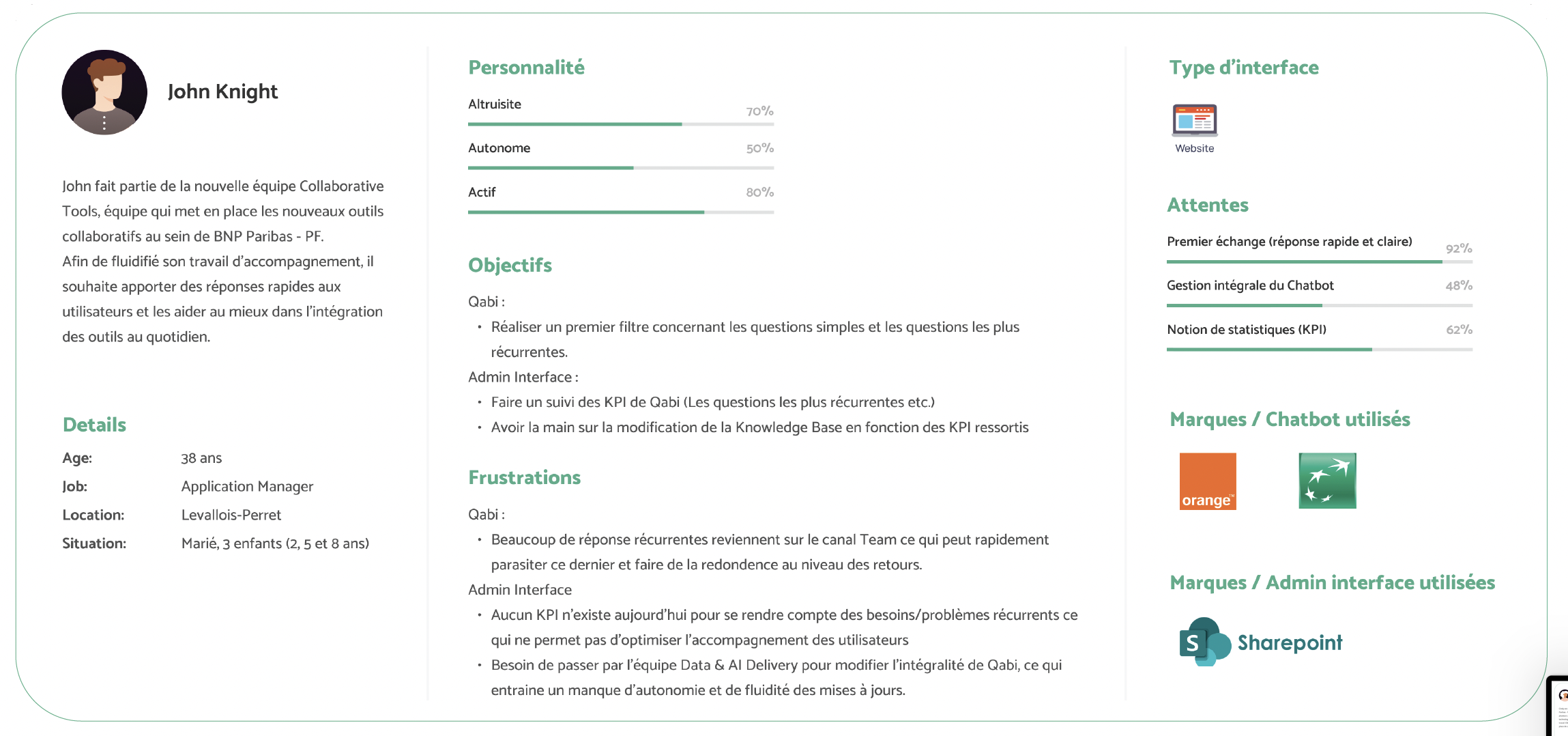
Persona — John Knight, from the team behind the chatbot.
Designing a new decision tree
My role?
Following the research phase, I ran workshops to design a new model and decision tree, working with the data scientists and developers. A streamlined decision tree was designed with two funnels: going through one of the pre-filled topics, or asking a question directly.
Outcome?
I was able to translate this tree into a user flow, mapping the back-end and front-end elements that would interact during an exchange with the chatbot. The final tree was designed to adapt to the various needs of internal teams.
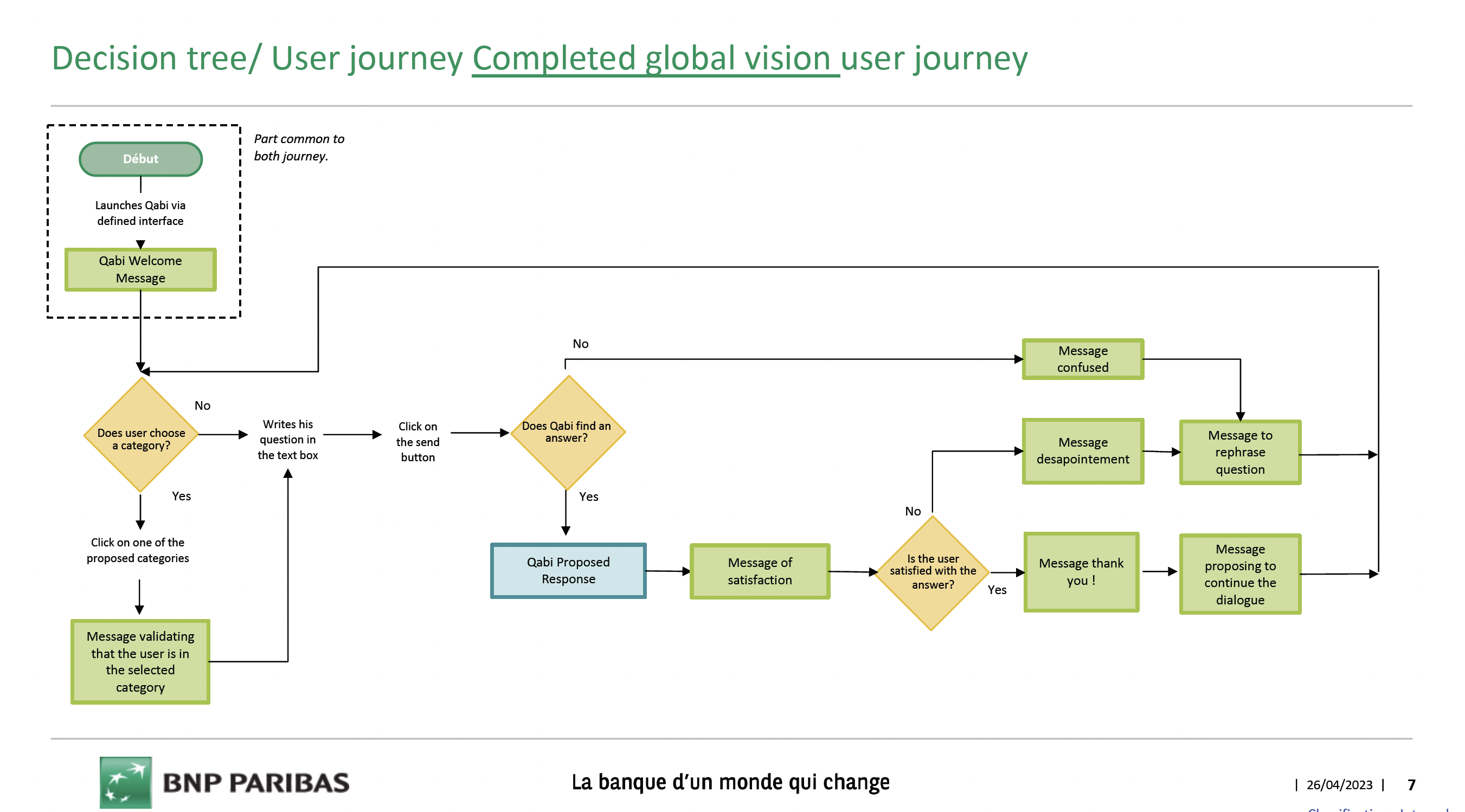
User journey — complete global vision.
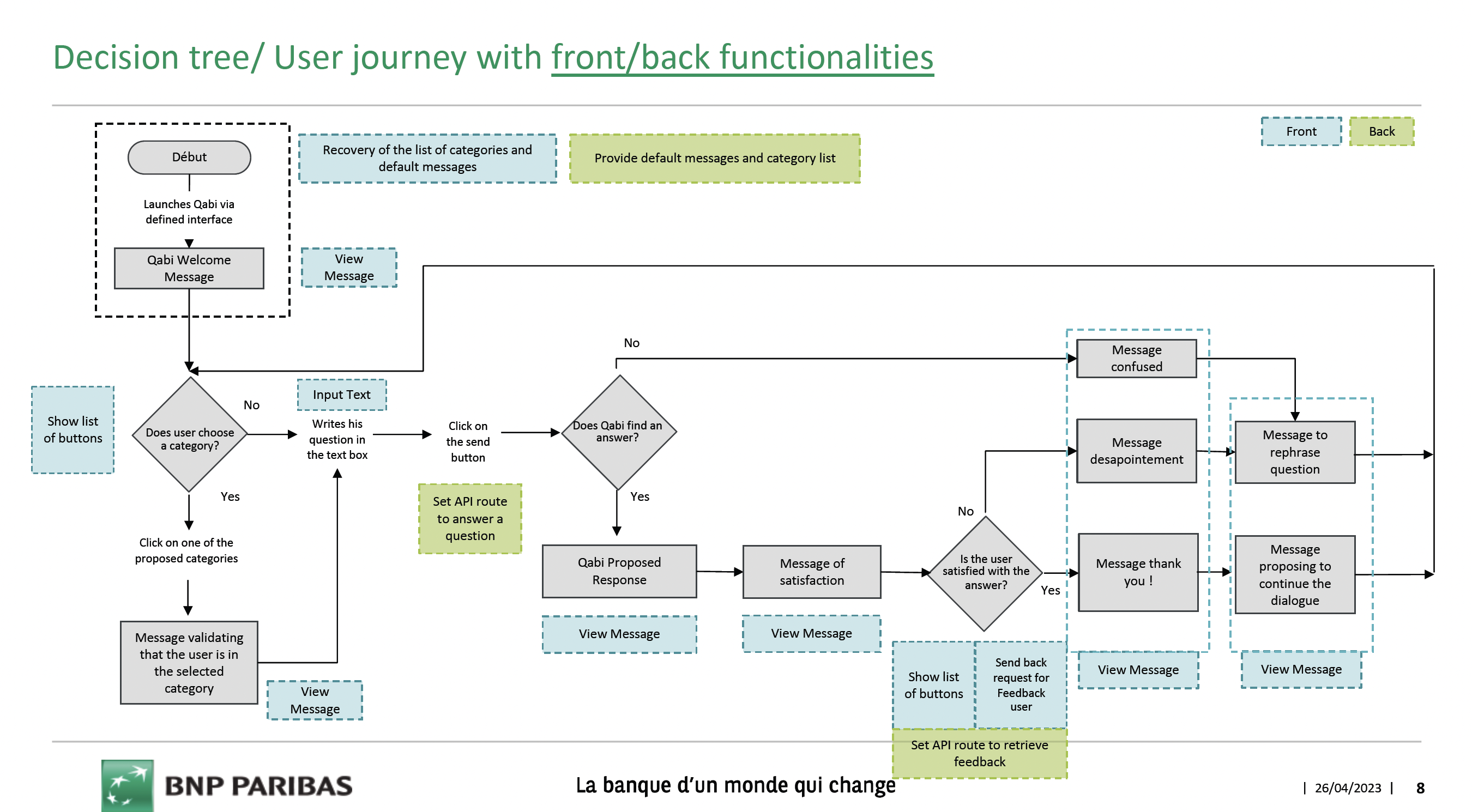
User journey — with front/back functionalities.